

Every year, the same thing happens.
People go hard for Carnival. Back-to-back events, long days on the road, little sleep, not enough water. In the moment, it feels worth it. A few days later, not so much.
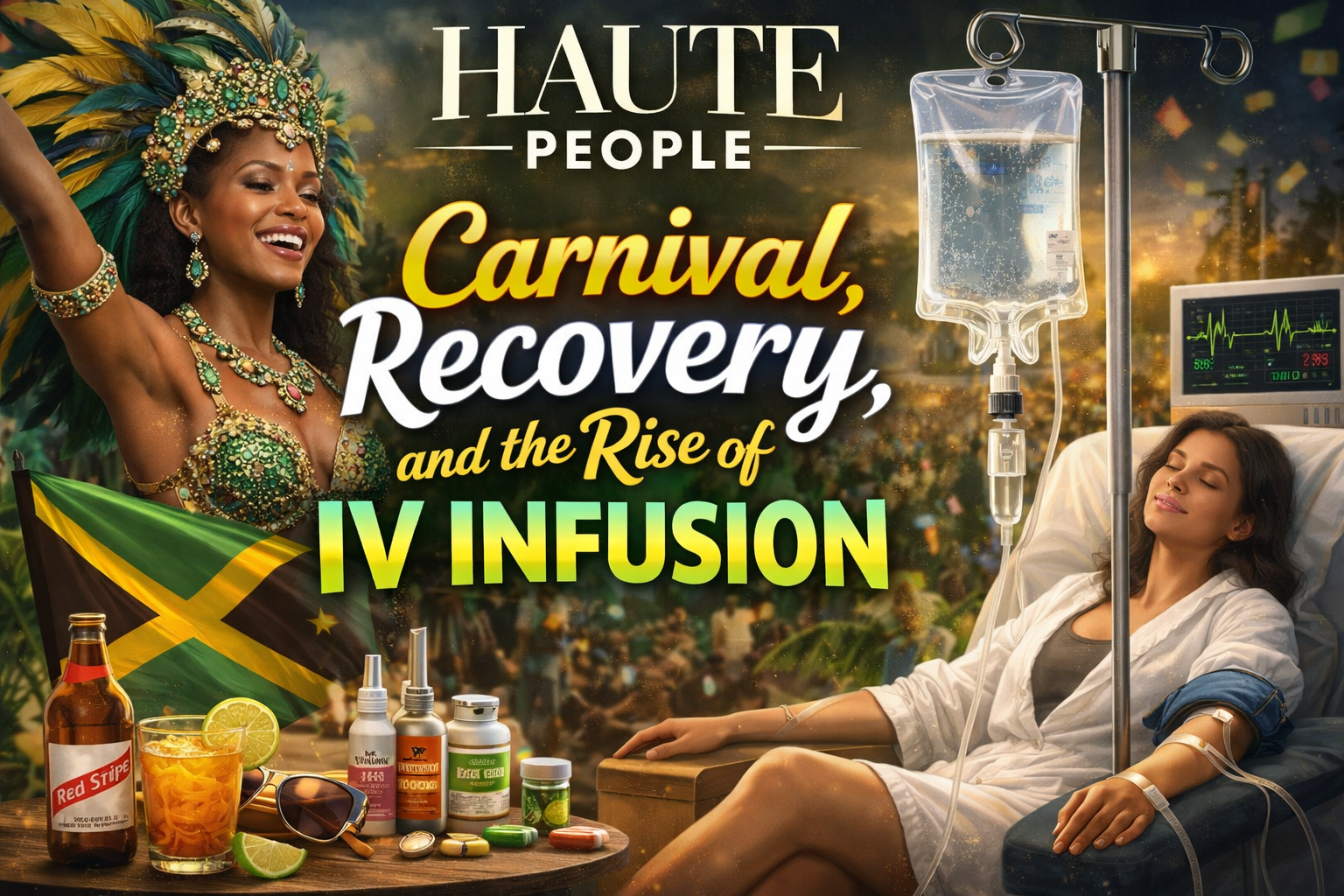
Carnival, Recovery, and the Rise of IV Infusion
At We ‘R’ Family Medical Centre, Dr. Cheser Adams has seen the pattern enough times to know it’s not random.
“People don’t come in before Carnival asking how to prepare,” she says. “They come in after, when their body starts pushing back.”
That pushback shows up in different ways. Some feel it as exhaustion that doesn’t go away. Others complain about headaches, dizziness, or just feeling off. What most don’t realise is that these aren’t isolated symptoms, they’re signs the body is depleted.
And it doesn’t take much.
Hours in the sun. Alcohol. Skipped meals. Minimal rest. Repeat that over a few days, and the body starts running on empty.
So why are more people starting to look at IV infusion?

“It’s not because it’s trendy,” Dr. Adams explains. “It’s because it works quickly. When you’re already dehydrated or low on nutrients, drinking water alone isn’t always enough to correct it in a reasonable time.”
IV infusion delivers fluids, vitamins, and minerals directly into the bloodstream. At We ‘R’ Family Medical Centre, that support is not one-size-fits-all. Patients are assessed and guided towards specific options based on what their bodies need.
“For some people, a simple B12 shot can make a difference, especially if energy levels are low,” Dr. Adams notes. “Others may need a B complex combined with IV infusion to support both hydration and nutrient levels.”
In more depleted cases, particularly where fatigue is more severe, additional support may be required.
“We also offer iron combined with B complex in IV infusion, or iron with IV infusion on its own,” she adds. “Those are typically for individuals who are significantly run down or showing signs that their body needs more than just basic rehydration.”
Still, the more interesting shift isn’t just what’s available, it’s when people are choosing to use it.
That raises a bigger question, one that hasn’t really been part of the culture before. What if you didn’t wait until your body crashed?
“If you go into Carnival properly hydrated and balanced, your body performs better,” Dr. Adams says. “You have more energy, you recover faster, and you’re less likely to feel that extreme drop afterwards.”
But for many, that drop is already familiar.
The post-Carnival “crash” isn’t just about being tired. It’s the body trying to reset after being pushed beyond what it can comfortably handle.
And ignoring it comes with consequences.
“We see people who try to just push through it,” she says. “But when symptoms like fatigue, muscle cramps, or lightheadedness linger, it’s a sign the body hasn’t recovered. That’s when intervention becomes important.”
There are also simpler signals people tend to overlook. Dry mouth. Dark urine. Slower reaction times. Even irritability. All indicators that hydration and nutrient levels are off.
The reality is, Carnival isn’t slowing down. If anything, people are doing more, travelling more, and stacking more events into shorter periods of time.
The question is whether recovery habits are evolving at the same pace.
“You can’t treat your body like it’s unlimited and expect no consequences,” she says. “Whether it’s IV therapy, targeted support like B12 or iron, or simply better hydration and rest, something has to give.”
Because once Carnival is done, the experience is over.
What’s left is how your body handles what you just put it through.


